


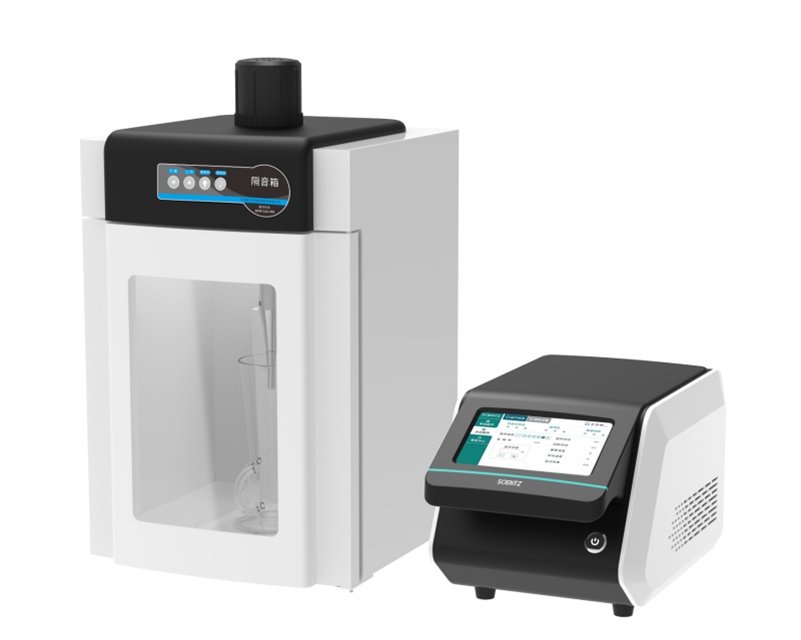
Description
Ultrasonic cell disruptor/crusher is a multifunctional tool that utilizes the cavitation effect of ultrasonic waves to process samples of various volumes with a choice of models and suitable probes. This tool is equipped with continuously adjustable time and power settings, UV sterilization feature (on the integrated type), and a digital power supply system with a high-performance DSP processor that supports automatic frequency tracking and high working stability. Its functions include the destruction of plant and animal tissues, cells, and bacteria, as well as applications for emulsification, separation, dispersion, extraction, cleaning, and acceleration of chemical reactions. This tool is widely used in the fields of life science, materials science, and the environment.
Application area :
Bioengineering:
Disruption of cells, bacteria, viruses, spores, and other cellular structures; preparation of DNA fragmentation in high-throughput sequencing and chromatin immunoprecipitation (non-contact fragmentation).
Food Engineering
Homogenization of beverages using ultrasound; aging and mellowing techniques for wine; accelerating dissolution and chemical reactions, such as in the processing of oils and fats;
Environmental Engineering
Studying homogeneous soil and rock samples; investigating the structural and physical characteristics of rocks;
Biopharmaceuticals
Dispersion of injectable pharmaceutical substances; dispersion and extraction of traditional Chinese medicine; pyrolysis, emulsification, homogenization, and fragmentation of particulate matter such as carbon nanotubes and rare earth materials;
